OK, I know we espouse an altruistic attitude here and all, but it's time for me to throw all that out the window for a moment. Monday, January 14, 2008
***Shameless Plug Alert!***
OK, I know we espouse an altruistic attitude here and all, but it's time for me to throw all that out the window for a moment. Sunday, January 13, 2008
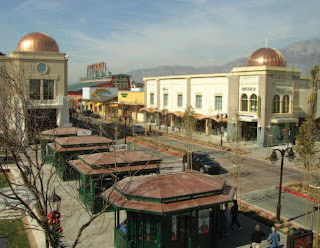
Reprint: Why London's downtown matters
Why London's Downtown Matters
The London Free Press
Jan. 11, 2008.
No discussion of urban design, or placemaking, or the Creative City, or a vibrant economy, or healthy suburbs can occur without a lot of talk about a city's downtown.And there has certainly been lots of discussion about London's over the years. As early as the 1950s, downtown businesses have been fretting about a decline, while politicians have made various attempts to "revitalize" the core.
It's an ongoing project.
Downtown gets more attention than any other neighbourhood in London, politically, economically, socially.
And it should: it's the biggest in Southwestern Ontario.
Planning rules have been eased and taxes removed to encourage development of residences in the core. Laws have been written to prevent office skyscrapers from being built outside the core. Grants have been made available by various agencies to redevelop apartments above retail space and improve retail facades. The list is endless.
Hundreds of millions of dollars in public money have been invested in such institutions as the John Labatt Centre, the Covent Garden Market, the Central Library, the Convention Centre, the Central Y and the VIA Rail station -- all because community leaders, private and public, know a healthy downtown means a healthy city -- a healthy region.
It's all paying off. People are returning to the core to live. But that doesn't mean there's not still plenty of work to do.
Some Londoners believe the downtown is unsafe. Hogwash. Some believe there's nothing to buy. Hogwash. Some say traffic is a problem and parking is scarce. Hogwash. London's downtown has a larger variety of retailers, the best restaurants, more cultural activities, the biggest sporting events, superior business opportunities and unique residential options that beat out those anywhere else in the city. They're as not predictable as those in the suburbs, but they are treasures and they're unique to London.
Meanwhile, London's core is healthier than many other downtowns across the province, and certainly across the continent. The reasons for this are myriad, but mostly it is because community leaders have faith in it and have continued to invest in it. And they have faith in it because they know the downtown is not just the heart and soul of the city, it's the future. We can never be allowed to give up on it.
Friday, January 11, 2008
Bringing in the ringers
The University of Windsor announced the creation of a new Cross-Border Transportation Studies Institute on Thursday. According to the press release, the new Research Chair, Dr. William Anderson, spent the past 10 years with Boston University as a part of the Department of Geography and Environment. Of particular interest to ScaleDown readers, Dr. Anderson (link to CV) was also a part of the Centre of Transportation Studies who, with third party funding, published a number of papers relating the economics of mass transit, new urbanism and the global economy and urban land use.Four More Years ?!?
That’s how long we’re putting the Community Improvement Plans for Sandwich, Downtown, Glengarry-Marentette, Ford City and Little River on hold. There have literally been hundreds of thousands of hours--those of our salaried administrative staff and the volunteer hours of prominent community leaders and residents--that have been invested into these documents.Thursday, January 10, 2008
Letting the economy do our dirty work for us...
Why is it that it takes an episode of economical crisis for the trends to change to a more sustainable path?It seems that it takes times of economical crisis to force the changes that the experts say we need to make to move towards a more sustainable existence. Is it because people equate this more sustainable world to one of strife and stagnation?Housing starts lowest since 1984, down 41%
Falling to their lowest levels since 1984, housing starts across the Windsor area dropped by 41 per cent in 2007 compared to the previous year, according to the Canada Mortgage and Housing Corporation.
Single-detached starts fell by 40 per cent and multiple home starts dropped by 44 per cent. Overall, there were 614 starts in 2007, compared to 1,045 a year earlier.
"A combination of adequate choice in the resale market, job uncertainty and weaker consumer confidence has resulted in less demand for new homes," said Margot Stevenson, a market analyst for CMHC.
In December, there were 26 single unit starts, unchanged from a year ago. Multiple starts, which consisted of four semi-detached units and 12 apartment rental units, were 56 per cent higher in December than a year ago.
In a year-to-date comparison, starts fell by 55 per cent in Windsor, 43 per cent in Lakeshore and 41 per cent in Amherstburg.
In LaSalle, they increased by 44 per cent over the same period and by a whopping 157 per cent in Tecumseh.Across Ontario, starts fell by seven per cent in 2007 compared to 2006.
Wednesday, January 9, 2008
James' Lunch Date...
Guest Blogger - James CoulterI went to lunch last week with a city employee.
My intention was to get some input/advice for the downtown charrette. I ended up, well, a little disappointed.
The conversation around the charrette was productive. My city friend helped me establish a framework for a questionnaire and really helped me nail down why I want to organize this event. I want to demonstrate to our elected officials that the people of this city really care about downtown and that they want to be involved in the planning process.
How did I end up disappointed? Well, once we got through the first part of our conversation I started to ask about certain areas of the city and why they ended up the way they have. Specifically, I wanted to know about the East Riverside Planning Area. I live in the East end, and my running routes sometimes take me through this sloppy, wasteland of chipboard and vinyl, crapola houses.
I said to my friend, “I remember seeing the plans of survey for this area back when it was first being developed. I remember thinking that this was such a great opportunity for the city to develop a new town centre. Something like a modern Olde Riverside or Walkerville. You know, a main street with shops and offices and apartments with nice residential streets intersecting.”
He said, “That was the plan. It was drawn up like that - really nice.”
“Well”, I asked, “What happened?” The answer was ridiculous, but it said so much. It seemed the developers came back and said that they couldn’t sell the kind of housing that the plan called for. The market wanted the suburban home, the kind with the big garage and a house behind it. So the plan was amended and the rest is history. Our city is in trouble because our officials amend the official plans to accommodate developers, contractors, and high-school buddies, whatever. The city’s official plan is full of progressive language talking about mixed-use development, walkable communities and alternative transportation. Yet the building department allows continual expansion of big box developments and more and wider roads and housing, miles from any amenities.
I guess it was naïve on my part to imagine that city government is any different from higher levels of government where special interests and lobbyists “grease the wheels”, but really. Our elected officials live in our neighbourhoods. They drive the same roads as us and worry about the values of their properties and business interests - just like us. So how can they make decisions that do nothing to improve the quality of life for their constituents, their neighbours? City politicians are closest to the electorate, why should a developer or an out-of-town land owner’s interests be more important than ours?
Politicking to save a part-time job and some kind of quasi-celebrity status, it’s nauseating.
James Coulter is an Engineering Technologist with the School of Building, Design and Construction Technology at St. Clair College. His opinions are plentiful and may not reflect those of his employer or the teaching faculty at the college.
Tuesday, January 8, 2008
Zenn and the art of responsible motoring
I know, you're an intelligent, responsible person who just wants to do the right thing. You recyle, use compact flourscent light bulbs and avoid Wal-Mart like the plague, yet there's still that gnawing feeling something isn't right..."I know that I should buy a more fuel efficient vehicle, yet the best are Japanese imports! What's a responsible Canadian consumer to do?"
Can't we all just get along?
"Cities everywhere are facing shrinking revenue streams and struggling to provide municipal services. By working together and sharing resources, local governments can maintain and even improve essential public services like fire and police protection."Sound familiar? What kind of progressive, downtown revitalization group would say such a thing? Nope, that was the Michigan Suburbs Alliance.
"In order for southeast Michigan to move forward, it is imperative that municipalities also cooperate with non-governmental regional stakeholders. Just as intergovernmental cooperation can stretch municipal resources, collaborating with others in the region, such as our world-renowned universities, can enable cities to make accomplishments they would not be able to individually. As funds continue to dry up, regionalism will prove to be not only important, but essential to maintaining the vitality of mature suburbs."
So they took the bull by the horns and actually did something about it. By creating the Creating Collaborative Communities program, they are teaching city managers, mayors, council members, human resource and finance directors, fire and police chiefs, and union leaders how to best approach joint service delivery and continue providing high quality services to their residents.
Can you say "Road Trip"?
There are many resources available to groups that deem it imperative in this day and age to work towards regional cooperation. The advantages of doing so in Windsor/Essex are crystal clear - survival.
The Urban Land Institute (ULI) has identified regional cooperation and coordinated regional planning as a priority. This is a timely issue as the global competition amongst regions becomes more pronounced. Virtually all growth-related issues—from how to achieve economic diversity to how to integrate land use and transportation planning in order to accommodate growing populations—are regional in scale. Recognizing the importance of regional cooperation to the future economic competitiveness and livability of metropolitan regions, ULI works with District Councils and ULI members on regional efforts that will enact change on the regional and local levels. They have recognised Regional Visioning as such an essential aspect of growth management, they've developed the Reality Check program to engage regional leaders in a regional dialogue on growth issues.
“Reality Check brought together many of Southern California’s warring constituencies and led to a broader and more inclusive vision for the growth of the Los Angeles region.”– Stuart R. Mork, Reality Check Chair, Los AngelesAfter the evidence provided by Windsor city councillor Fulvio Valentinis last night, we couldn't be further away from our adjoing municipalities when it comes to regional cooperation. But to call them "warring constituencies"? Possibly.
What do you think? Is it time that our region's stakeholders get locked up into a room (like these folks (video) in Washington) until they come up with a solution? It is painfully obvious that the Windsor/Essex region will not move forward together unless they collectively deem it a priority. The video you just watched shows a region planning for unprecedented growth. We need to plan simply for survival.
Monday, January 7, 2008
A rose amongst thorns before council tonight
Coming before tonights council is an important document that I really hope our elected leadership reads front-to-back.
"Sustainability needs to become the measure for economic achievement and public investment"
- Clive Doucet, City Counselor, Ottawa
We are writing today to express praise and concern for Item 5, the Essex-Windsor Regional Transportation Master Plan (EWRTMP), as representatives of Scaledown.ca. Scaledown.ca is a local advocacy group and media outlet focused on establishing sustainable social and economic development in Windsor.
We applaud the conclusion of the EWRTMP that states "in order for the County, City and Towns to plan for an acceptable level of transportation service to year 2021, the focus will have to be on a combination of selected roadway capacity enhancements, and changes to development forms in urban settings that offer alternative transportation choices and reduced transportation needs." (emphasis added)
We draw your attention to the Transportation Demand Management (TDM) strategy which includes providing financial incentives, and disincentives, for single occupant vehicle usage, an integrated planning approach combining land use and built form to impact travel patterns, and the use of "hard urban edges to control urban sprawl". Modifying demand through creative and sustainable land use will prepare Windsor to service the aging Baby Boomers and their long-term independence, retain the socially conscious Generation X and generate a growing tax base for future civic needs.
We support the Demand-Side Options including funding and advocacy for non-motorized modes of transit, ride-sharing, urban design techniques to reduce trip length and, of critical importance, "providing for more transit, cycling and walking-friendly neighbourhood design." We enthusiastically sustain the findings of the study that demonstrate "intensified and mixed use urban development forms would have the greatest long-term benefits to the regional transportation system."
We caution against the premature approval of roadway expansion without exploring the opportunities that exist "through the application of ‘Smart Growth’ land use … to minimize or avoid the need for physical capacity improvements." We support the findings of both the EWRTMP and the 2005 Brownfield Redevelopment Study that show a 380% ROI on brownfield rehabilitation, not including a projected annual transportation cost savings of $66,000/hectare and a 10% increase in tax revenues for the surrounding 2.5 kilometers.
We express dire concerns with a regional transportation approach that facilitates the continued fall in urban population density in favour of the bedroom communities of Lasalle, Lakeshore and Tecumseh. We object to policies and plans that support the perception of Windsor as an obstacle to be navigated through and around as opposed to a residential, entertainment and employment destination. We oppose plans to improve commuter routes that facilitate the relocation of Windsor residents to outlying communities, especially at the expense of our urban neighbourhoods.
We strenuously object to the inflammatory language contained within the EWRTMP regarding the importance of the proposed roadway infrastructure expansion. By stating that "further delay will result in oppressive traffic delays crippling local industry and discouraging local investment and job growth" it suggests that it is impossible for Windsor to achieve economic prosperity without road expansion. To suggest that the proposed roadway expansions will, alone, "achieve a sustainable, efficient and effective regional transportation system" makes misleading correlations between economic sustainability and an increase in road capacity.
We ask council to directly allocate funds to address "the availability of alternative transportation modes … making transit, cycling and walking more attractive to regional residents." We ask that council resolve to fund and implement "more compact built forms, mixed-use neighbourhoods and developments, and [adopt] transit, cycling and pedestrian-supportive land use planning and urban design policies" in support a sustainable city. In addition, we ask that council consider these options before allocating funds for roadway expansion to support objective 4 of the EWRTMP which is "to provide transportation systems that enhance physical mobility and better [serve] the economic and social needs of the community."
Signed,
Joshua BiggleyChris Holt
Mark Boscariol
Sunday, January 6, 2008
Growth and the case for Scaling up.

I'm having a bit of an off blog semantical debate with others on this site. Chris wrote a great series called debunking the growth myth but my views on growth are different.
I am in favor of growth in Windsor, and lots of it. I want to see the density of the core of Windsor grow 10 fold. I want to see tens of thousands of new residents in our core, growth of new development of mixed use residential, commercial and office space. I want to see growth in the amount, size and quality of public spaces and the links between them. I want to see growth in Windsor's live music and venue's to host them. I believe this type of growth is necessary in creating a sustainable Windsor.
What I don't want to see is sprawl, big box development because that is unsustainable growth that leads to unwalkable neighborhoods. Lets face it, there should be a simple rule that council and our planning advisory committee should not permit anything to be built that they themselves do not want to live next door to.
Heres some exerpts from an Urban Land Institute that debunks the growth myths making the case for the growth of higher density in the core
Myth #1 - Higher-density development overburdens public schools and otehr public services and requires more infrastructure support
Fact #1- The nature of who lives in higher-density housing-fewer families with children-puts less demand on schools and other public services than low-density housing. Moreover the compact nature of high density development requires less extensive infrastructure to support it.
Myth #2 - Higher-density developments lower property values in surrounding areas.
Fact #2 - No discernable difference exists in te appreciation of properties located near higher-density development and those that are not. Some research even shows that higher-density development can increase property values
Myth #3 - Higher density development creates more regional traffic congestion and parking problems than low-density
Fact #3 - Higher-density development generates less traffic than low-dnesity development per unit; it makes walking and public more feasible and creates opportunities for shared parking
Myth #4 - Higher-density development leads to higher crime rates
Fact #4 - The crime rates at higher-density develpoments are not significantly different from those at lower density developments.
Myth #5 - Higher density development is more environmentally destructive than lower-density development
Fact #5 - Low-density development increases air and water pollution and destroys natural areas by paving and urbanizing greater swaths of land
Myth #6 - Higher-density development is unattractive and does not fit in a low density community.
Fact #6 - Attractive, well-designed, and well-maintained higher-density development attracts good residents and tenants and fits into existing communities
Myth #7 - No one in suburban areas wants higher-density development
Fact #7 - Our population is changing and becoming increasingly diverse. Many of these households now prefer higher-density housing, even in suburban locations.
Myth #8 - Higher-density housing is only for lower income households.
Fact #8 - People of all income groups choose higher-density housing
Maybe this puts me semantically at odds with scaledown's name and purpose. What do you think?
Friday, January 4, 2008
Letter to council

Just to follow up on my post regarding After Hours Bars, here is an open letter to council
Although I'm pleased to see that the after hours issue will finally be dealt with, I am saddened that it will be done in a very political climate where there is a possibility for an over reaction to an complex issue that is not black or white but grey.
I propose the following solution in order to continue flexibility.
Whatever gets proposed for closing times should have an exemption process similar to the noise bylaw.
Applications for exemptions on specific nights by specific establishiments should be brought before the Hospitality Resource Panel (HRP) Made up of administration, police, industry representatives and residents. At this time a report should be sent to council recomendding for or against. If required, the HRP can work out conditions for that establishment whereif ignored will constitute cause for not recommending future exemptions (staggered closing, drink prices, controls on drink contests or any other tool of responsible management)
At that point the recommendation of the HRP can be put on the consent agenda with no need to politicise these requests.
The HRP should be instructed to facilitate exemptions for all responsible owners so that we do not end up curtailing the chance to lure world class entertainers to our city. This is a way to reward responsibly run establishments while controlling those who do not manage their locations responsibly. Please, we have one chance to get this right. Get it right.
Mark Boscariol
P.S. When can we get massage parlors on the agenda? We have the solutions, we just need to get them before council. It's astonishing that our democratic right to get an issue before council can be denied
Thursday, January 3, 2008
No Fortune Teller Necessary...
Look before you leap. That is a piece of advice that my parents told myself, and parents around the globe have no doubt imparted upon their young charges, since time began.Did Windsor's city councillors receive that same advice while they were impressionable young people as well? With all the signs pointing to a drastic societal change roaring towards us, now would probably be the best time to start preparing the citizens who voted them into office for the new world ahead of them.
"...persistently high gas prices may mean that the next building boom will take place not at the edges of metropolitan areas but far closer to their cores. People are more willing to drive 20 miles each way to work every day, burning a couple of gallons of gas in the process, when gas costs less than milk. But as gas prices climb, long car commutes become a rising tax on exurban homeownership, and the price people are willing to pay for homes in remote areas will fall.So why is it our councillors are still adopting sprawl-inducing amendments to our official plan and regional transportation policies at the expense of strengthening Windsor's core? Have they not heard the news? Are they hoping that these high gas prices will just go away sometime in the near future?. Well, folks, according to The Washington Post, these are realities that the most successful municipalities must prepare for if they are to survive into the next decade.
"...sprawl was built on the twin pillars of low gas prices and a relentless demand for housing that, combined with the effects of restrictive zoning in existing suburbs, pushed new development outward toward cheap rural land. Middle-class Americans, not able to find housing they could afford in existing suburbs, kept driving farther out into the countryside until they did. Gridlock in the suburbs and the expense of providing municipal services to sparsely populated communities imposed their own limits on how far we could spread. As a result, the density of metropolitan areas, which fell steadily in the postwar years, had begun to creep back up in the 1990s.
ED: I forgot to link to the Windsor Star article that made me want to post this piece in the first place: Oil And Gold Surge. With oil topping $100 a barrel for the first time ever, people MUST be starting to take notice of this barrage of events.
Wednesday, January 2, 2008
What's in a "Scene"?
Richard Florida, guru of all things creative, has come out in his latest Globe and Mail article to tell us that a thriving music scene has a lot to do with a city's economic growth.Music combines with technology and business trends to put these places on the map. It reflects their openness to new ideas, new people and new sounds. If you really want to see entrepreneurs in action, go talk to local musicians. They have to put their band together, get gigs, market their songs, promote themselves, set up tours, manage budgets and meet payroll. The places where these music scenes flourish have the underlying commercial ecosystem that is open to new ideas and can mobilize real resources around the market opportunities they signal. And as one of my former students once put it, music is the best way to market a region. Creative people don't like marketing slogans. But they do identify with a city's sound - what he called its "audio identity."
"It signals the rise of regional ecosystems that are not only open to new sounds and new ideas, but have the size, scale and commercial oomph to retain key talent and turn their ideas into global commercial successes. Once music scenes of this scale get going, they produce a logic and momentum of their own and signal that more entrepreneurship is on the way."
Sunday, December 30, 2007
9 attitudes of Highly Creative People

Today I’d like to look at some attitudes to build into your approach if you want to be a more creative person:
I’ve written previously on the topic of curiosity because I’m convinced that it is an essential skill to build as a blogger. Learning to ask ‘why’, ‘what if’ and ‘I wonder…’ are great questions t build into your life if you want to be a more creative person.
My own uneducated answer to this question is - ‘yes’.
Some people are just creative - they don’t train themselves to think like they do and they often don’t even know that they are any different from the rest of us - it’s just who they are.
However I believe that we can all enhance our ability to be creative over time.
Saturday, December 29, 2007
Let's Get Windsor Moving (out to the county)
On Monday, January 7th, there will be a couple of items going before city council that will continue Windsor’s drain of residents out to surrounding bedroom communities and further solidify the automobiles dominance in our transportation hierarchy.Smart Growth, here we come…
Item #5 is the Essex-Windsor Regional Transportation Master Plan. In classic Orwellian double-speak, it pays homage to progressive notions such as following “a more regional approach to transportation planning matters including road infrastructure, transit, cycling and other sustainable transportation forms.”, yet the document continues on with a “list of critical projects that need to be completed.”, such as;
- Extend Wyandotte Street East to continue this streets push east.
- Widen E.C. Row Expressway to at least 6 lanes from Banwell Road to Ojibway Parkway,
- Widen Provincial Road/Division Road to a 4 lane arterial road from Howard to the south city limits,
- Widen and extend Lauzon Parkway to connect with highway 401 and then south to highway 3 in Maidstone “for the overall economc development and growth of the city”
Item #4 is more of the same, as the results of the Manning Road and County Road 22 Class Environmental Assessment and the preliminary design are coming before council. I got a chuckle when I read that these “improvements” were being carried out under the slogan “Let’s Get Windsor Essex Moving Strategy”, as I figured it meant let’s get Windsor residents moving out to Essex county. I don’t think that’s what they meant, however.
This engine will just continue chugging along until there is a critical mass of residents crying out together for it to slow down. City council, it seems, is trying to be everything to everyone, yet it succeeds at nothing. It says it wants to strengthen out downtown and established communities, yet it paves and widens escape routes to the suburbs allowing more city residents to flee the same traffic those widened roads encourage. It wants to plant “a million trees” to help clean our toxic air, yet it encourages motorist-only methods of transportation to built-up areas where walking and cycling are not a mobility options.
Thursday, December 27, 2007
Story of Stuff
I probably should have posted this entry prior to the beginning of the holiday shopping season (known affectionately as "Black Friday"), but yes - I got caught up in the cycle as well.Baby steps, Chris. Baby steps.
Take 20 minutes of your time and watch this short, animated film. Try not to get put off by the preachy-ness of it, as it contains some great information about our stuff, and the life-cycle costs it imposes on our society and our overall quality of life. After you're finished hearing the story, be sure to pass it on to your friends and family. Everyone needs to know that we are voting with our dollars for things we normally wouldn't support in an otherwise sane world.
It is the general consensus by us SDW chaps that if we only took a few steps back and took in more of the "Big Picture", we wouldn't make the same choices we are making today.
Happy New Year, and look forward to some more regular entries here in the near future...
Sunday, December 23, 2007
Respects and hope for change
The only way I know how to honour this latest victim is take measures to ensure we don't need a 3rd plaque to commemorate the next victim.
Friday, December 21, 2007
Maybe Mr. Rogers was right after all...

I've been thinking about neighbours since moving to a new neighbourhood last year. South Windsor is highly car dependant, with a glaring lack of sidewalks and streetlights to impede its' walkability. In spite of the challenges I see multitudes of people out walking, riding their bikes and otherwise engaged in the experience of living in a diverse neighbourhood. Alas, my generation is quite addicted to our 'convenient' automobiles, but the older generation, many who have lived in the area since it was built in the mid-50s, take the time stroll the streets, mingle with neighbours, and stoke the fires of friendship that have burned for decades.
I'm quite proud of my little block on Academy Drive. When we moved in our neighbours, who have lived in their home since it was built, came to introduce themselves. They quickly got our names and phone number and added us to the neighbourhood directory. We were invited to the neighbourhood BBQ held every August and got the low-down on all of the neighbours; who had kids (more than I thought), who liked kids (pretty much everyone) and a myriad of other neighbourhood history. Although there are no sidewalks on my street the neighbours religiously reclaim the road for impromptu discussions, often under the auspice of "trying to round up the kids" or, my personal favourite, "mowing the lawn". Our small block takes pride in bucking the trend of isolation, instead cultivating and developing strong personal ties within our little enclave of urban happiness.
The real sense of community was displayed last Sunday when Windsor got its' first winter storm of the season and, even before the snow had stopped, neighbours were out shoveling their driveways. However, instead of each neighbour tackling their own drive neighbours swarmed each others driveway clearing the snow with military precision. From driveway to driveway this little army of snow shovels traveled, enjoying the process of simply being together.
It behooves each of us who cherish the neighbourhoods that we live in to echo the call of Mr. Rogers and ask our fellow citizens, "Won't you be my neighbour?" Sure, it means turning off the television, putting away the iPod, logging off the internet and going outside to interact with each other, but our future depends on restoring the strong human interaction that technological conveniences have unwittingly stripped from us. I am sure that you will find, as we have in our neighbourhood, that the richness of friendship and a vibrant community far surpass the electronic solitude sold to us as mass media.
Thursday, December 20, 2007
He's makin' a list, checkin' it twice...
OK, class. It's time for your holiday homework. Take a cue from James and put your New Year's Resolutions down on paper and be sure to post them in a spot in your home where they are easily within view of not only yourself, but whomever you share your abode with.You want to stick to them, right?
I am just about to do this myself...
Guest Blogger - James Coulter
…scale down, James
It’s that time again. The end of another year, a time when we look back at what has been and look forward to what may be. We make resolutions, some we can keep, some we can’t. Here are my resolutions for 2008.
Drive less. Over the last year I have gotten much better about how much I actually drive. This past fall I added lights and reflectors and was able to ride my bike to work into November. For 2008 my goal will be to ride to work no less than three times per week and other than big weekly grocery trips I will not drive for trips shorter than 5km round trip.
Get involved in my community. My wife has told me more than once “if you don’t like what’s going on, do something about it”. My first step has been to get involved with …scale down, Windsor. For 2008 I will watch, attend or at least read the minutes of Council meetings. Also for 2008 I will volunteer with my community residents association.
Use public transit more. If there is an event downtown I want to attend, I will use the bus to get there (if my bike is not an option).
Start a garden. My backyard needs some sprucing up, so I will plant a vegetable garden rather than a cartoon landscape.
Continue to work on my home to improve its energy efficiency.
Visit the library twice each month. In 2007 we started to go to the library as a family activity. Our visits have been irregular, so for 2008 I will plan to hit the books more often.
Keep stirring the pot. In 2007 I sent a couple of letters to the editors at the Windsor Star. I kept that up in 2008 along with my work here. I think the Windsor blogosphere will have a big impact on the next municipal election and I want more Windsorites to get involved with the blogs and other activities to make a difference until 2010.
James Coulter is an Engineering Technologist with the School of Building, Design and Construction Technology at St. Clair College. His opinions are plentiful and may not reflect those of his employer or the teaching faculty at the college.
